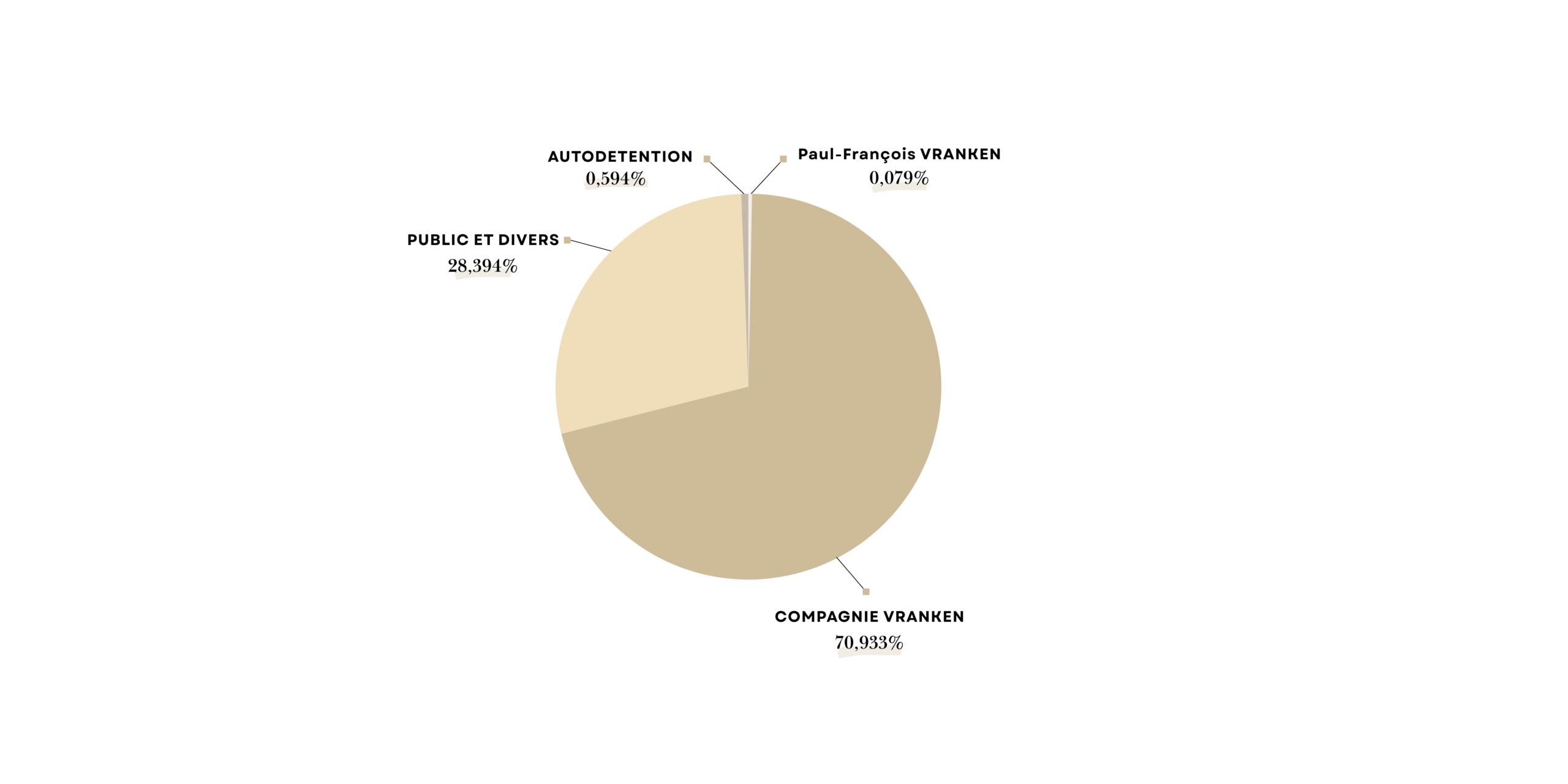
Single voting rights
Voting rights attached to shares are proportional to the percentage of capital they represent. Each share carries one vote.
Double voting rights
Double voting rights, compared to those attached to other shares in proportion to the share capital they represent, are granted to all fully paid-up shares that have been registered in the same shareholder’s name for at least four years.
The conversion of a share into bearer form, or any transfer of its ownership, results in the loss of the aforementioned double voting rights. Conversely, transfers resulting from inheritance, the liquidation of marital property between spouses, or inter vivos gifts in favor of a spouse or a relative entitled to inherit do not result in the loss of the acquired rights and do not interrupt the holding periods referred to above.
Furthermore, in the event of a capital increase through the capitalization of reserves, profits or share premiums, double voting rights may be granted, as from their issuance, to registered shares allotted free of charge to a shareholder in respect of existing shares already benefiting from such rights.
Eliminating double voting rights requires :
– a decision by the Extraordinary General Meeting of all shareholders to amend the Articles of Association;
– ratification of this decision by the Special Meeting of Shareholders with double voting rights, which must approve the cancellation by a two-thirds majority.
Non-voting shares
Treasury shares are stripped of voting rights at General Meetings.